Which cricket is it?
Most crickets found inside Boise homes fall into two groups, and they behave differently enough that the difference matters.
Field crickets
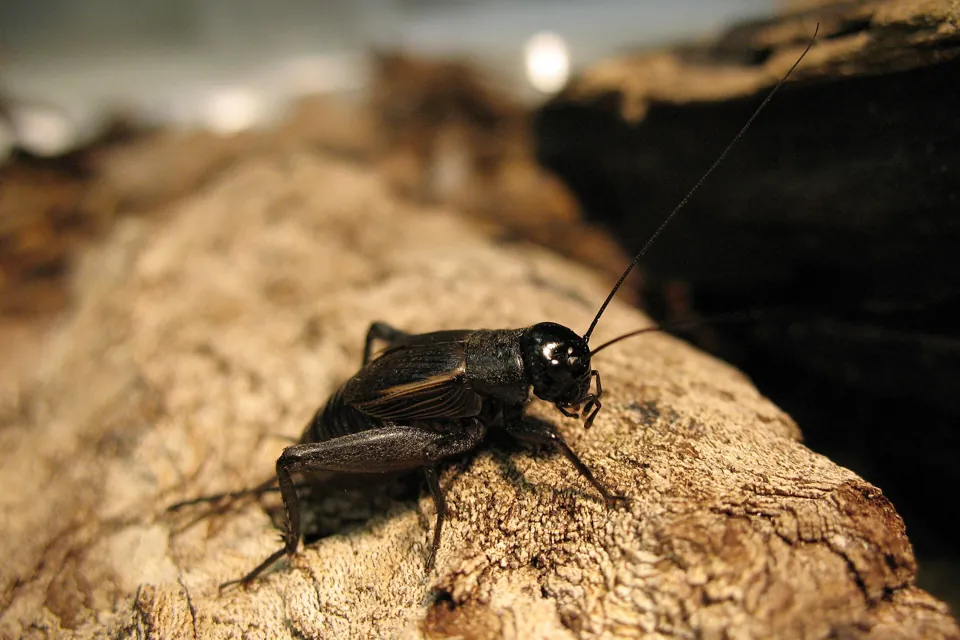
Field crickets are the familiar black to dark brown crickets, roughly three quarters of an inch to an inch long, with a shiny body, long antennae and thick hind legs built for jumping. Females carry a long, needle-like egg-laying tube at the tip of the abdomen. Males make the chirping by rubbing their wings together, usually after dark. These are outdoor insects that live in lawns, garden beds and weedy edges, and they tend to come indoors by accident while looking for shelter or following light.
Camel crickets
Camel crickets, sometimes called cave crickets, look like a different animal: tan or mottled brown, wingless, with a humped back, very long legs and antennae that can be longer than the body. They do not chirp. Instead of heading for lights, they settle into damp, dark places such as unfinished basements, crawlspaces, utility rooms and the corners of garages. When startled, they often jump toward the disturbance, which is unnerving but harmless.
- Peak season
- Late August through the first hard frosts
- Most common indoors
- Field crickets; camel crickets in damp lower levels
- Usual entry spots
- Garage doors, window wells, basement windows, door gaps
- Active
- Mostly at night
- Damage
- Occasional chewing on fabric and paper
- Health concern
- Generally considered a nuisance, not a health risk
When and where they show up in Boise homes
Field crickets spend the summer outdoors, growing through several stages before reaching adult size in late summer. That timing lines up with Boise weather. The valley's official weather station records July and August as the driest months of the year, with only about two tenths of an inch of rain in each, and summer days regularly pass 90°F. By late August, unwatered ground is hard and cracked, and crickets are adults and on the move.
Then the nights start to cool. Crickets search for cover, and the warm, sheltered edges of a house look ideal: the gap under a garage door, a stack of boxes against a basement wall, the gravel and leaf litter at the bottom of a window well. In parts of town where yards rely on canal irrigation, the fall shut-off can dry out lawns quickly, and some homeowners notice more crickets around foundations not long after.
Location shapes what you see:
- Older homes in the North End, East End and on the Bench often have basements, settled foundations and original window wells, which give crickets easy ways down and in.
- Homes on the foothills edge, from Northwest Boise to Harris Ranch and the Barber Valley, sit beside open grass and sagebrush where field crickets live in large numbers.
- Neighborhoods near the Boise River, the Greenbelt and canals may have more moist soil and dense vegetation that support camel crickets and other moisture-loving insects like millipedes and pill bugs.
Lighting is the other big factor. Bright white porch and garage lights draw field crickets from across a yard, and once they collect against the house, finding a way inside is a matter of time. Most field crickets that get indoors do not survive long or reproduce well in a dry home, which is why fall cricket activity usually fades as winter sets in. Camel crickets are different: in a basement that stays damp, they can persist year round. Our seasonal pest calendar shows how crickets fit with other fall arrivals.
Signs to look for
A single chirping cricket behind the dryer is common in Boise every fall. A steady pattern is worth paying attention to.
- Chirping at night from the basement, garage, laundry room or behind furniture, often for several nights in a row
- Crickets gathered at porch lights, garage doors or lit basement windows after dark
- Live or dead crickets in window wells, along basement walls or near floor drains
- Small, irregular chewed spots on stored clothing, blankets, cardboard or paper, especially items kept on the floor
- Pale, humpbacked, long-legged insects jumping out of corners in a damp basement or crawlspace
- More spiders than usual in the same areas, since crickets are a food source for them
What helps keep crickets out
Fewer crickets indoors mostly comes down to making the outside of the house less attractive and the gaps harder to find.
- Rethink outdoor lighting. Warm-colored or yellow-toned bulbs tend to attract fewer insects than bright white ones. Motion-activated fixtures, or lights mounted away from doors, keep crickets from collecting right at the entry.
- Close the gaps. Worn garage door seals, missing door sweeps, torn window screens and openings where pipes and wires enter the house are common entry points.
- Look at window wells. Clearing leaves and debris and keeping covers in good repair removes a sheltered spot right next to basement windows.
- Pull mulch and clutter back from the foundation. Firewood, stacked pots, thick ground cover and grass clippings against siding all give crickets a place to wait.
- Address dampness. Fixing plumbing leaks, keeping gutters and downspouts directing water away from the house and improving airflow in basements and crawlspaces makes them far less welcoming to camel crickets.
- Store items off the floor. Plastic bins with lids protect fabric and paper in basements and garages better than cardboard boxes.
A note on timing
The best time to work on lighting, seals and window wells in Boise is mid to late summer, before the August heat breaks. Once nights turn cool in September, crickets are already looking for a way in.
When to call a licensed provider
A few crickets each fall rarely need professional attention. Consider contacting a licensed pest control provider if:
- Crickets keep showing up indoors week after week despite sealing and lighting changes
- You find chewing damage on clothing, rugs or stored paper
- Camel crickets are living in a basement or crawlspace through the winter
- Chirping is disrupting sleep, especially in bedrooms on a lower level
- Crickets are arriving alongside other fall pests, such as boxelder bugs or mice, which can point to the same entry gaps
A provider typically starts with an inspection of the exterior and lower levels, looking at foundation gaps, garage seals, window wells, moisture and lighting. From there they usually explain where crickets are getting in, suggest exclusion or moisture fixes, and, when appropriate, apply a targeted treatment around the outside of the home applied according to its label. In Idaho, commercial applicators are licensed through the Idaho State Department of Agriculture. Our guide to choosing a pest control company in Idaho covers what to ask.
Boise cricket questions
Why do I hear more crickets in September than in July?
Field crickets reach adult size in late summer, and only adult males chirp. Cooler nights also push them toward buildings, so the chirping moves from the lawn to your garage or basement.
Are the crickets in my basement going to take over the house?
Field crickets usually do not establish lasting populations in a dry Boise home, and their numbers drop as winter arrives. Camel crickets in a consistently damp basement are more likely to stick around, which is why moisture matters.
Do crickets bite or carry disease?
Crickets are generally regarded as a nuisance rather than a health concern. They are not known to spread disease to people, and bites are rare.
Are Mormon crickets a problem in Boise homes?
No. Mormon crickets are a rangeland insect in parts of the West and are not a Boise household pest. The crickets in Boise basements are almost always field crickets or camel crickets.
Does living near the foothills mean more crickets?
It can. Homes that back onto open grass and sagebrush, from Northwest Boise to the Barber Valley, often see more field crickets in fall than homes surrounded by pavement. See our Boise neighborhoods guide for more.