Which fleas and ticks Boise households run into
Rocky Mountain wood tick
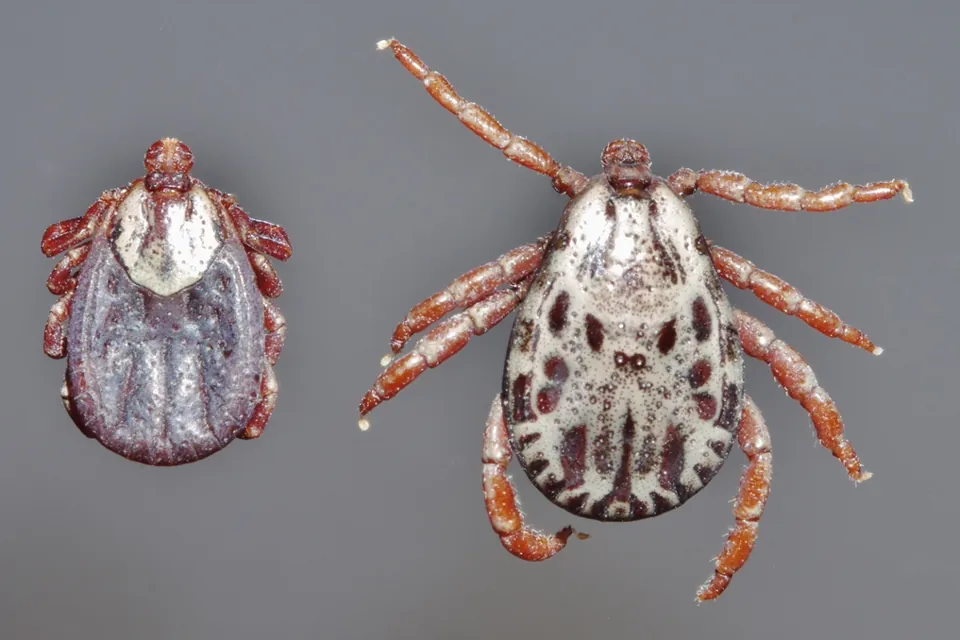
This is the tick most Boise hikers and dog owners find. Unfed adults are flat, reddish brown and about the size of a sesame seed. The female has a pale, mottled shield behind her head, and the male's back is covered in a mottled pattern. After a full meal, a female swells into a gray, bean-shaped body many times her original size. The species can carry Rocky Mountain spotted fever, Colorado tick fever and tularemia, and an attached female can cause tick paralysis in dogs and people. Paralysis usually eases once the tick is removed.
American dog tick
The American dog tick is a close relative and looks very similar. It is less common in southwestern Idaho than the wood tick. Telling the two apart usually takes a magnifier and some experience. For practical purposes in Boise, both are handled the same way: check for them, remove them promptly and watch for illness afterward.
Cat flea
Despite the name, the cat flea is the species found on most dogs and cats. Adults are dark, narrow from side to side and quick to jump. They spend their adult lives on an animal. Their eggs fall off into carpet, bedding and the soil under porches, and most of the problem develops there.
- Main tick
- Rocky Mountain wood tick
- Peak tick season
- Spring into early summer
- Tick habitat
- Foothills grass and sagebrush, not lawns or living rooms
- Main flea
- Cat flea, on dogs and cats alike
- Flea season indoors
- Can run year-round in heated homes
- Pet protection
- Choose it with your veterinarian
Where and when they turn up in Boise
Ticks follow the foothills calendar. Wood ticks climb grass stems and sagebrush and wait with their legs outstretched for a passing animal or person. In Boise, that happens on the Ridge to Rivers trails, in Hulls Gulch above the North End, on the slopes around Camel's Back Park, and on the climb toward Table Rock on the east side. Activity usually picks up as the hills green in early spring and stays high into early summer. By July and August, the driest months on the airport record, the hillsides bake and adult tick activity typically drops off sharply.
Homes in the Boise Highlands, Harris Ranch and the Barber Valley, Northwest Boise and the upper North End sit closest to that habitat. Dogs that roam unmowed edges or open foothills ground near these neighborhoods bring ticks home more often than dogs walked on pavement. Wood ticks rarely settle in indoors. A tick in the house almost always arrived on a person or pet within the past day or two.
Fleas follow animals. A dog that plays at a park or a cat that goes outdoors can bring a few adults home, and those few can start an indoor cycle. Raccoons and feral cats denning under decks, porches or crawlspaces are another common source. That source matters in older homes with open foundation vents and along the river and Greenbelt corridor, where wildlife moves easily. Boise's dry summers are hard on flea larvae out in the open. Carpet, pet beds and shaded crawlspace soil stay mild enough for larvae to develop, though, so indoor flea trouble does not end when the weather turns cold.
Signs to watch for
- A flat brown tick crawling on clothing or a dog's coat after a foothills walk
- A firm, gray, bean-like bump on a pet, often around the ears, neck, armpits or between the toes
- Unexplained weakness or wobbling in a dog in spring, which is worth an urgent vet call because of tick paralysis
- Pets scratching, chewing at the base of the tail or losing fur in patches
- Black specks in pet bedding that turn reddish on a damp white paper towel. This is flea dirt, which is digested blood.
- Small, itchy bites clustered around ankles and lower legs
- Fleas jumping onto socks in a room that has been closed up, or in a home recently vacated by someone else's pets
After every foothills hike
Check yourself, your kids and your dog before getting back in the car, and again at home. Look along the hairline, behind the ears, at the waistband and behind the knees. If a tick is attached, remove it promptly using the method the CDC describes. See a doctor if a rash, fever or body aches appear in the following weeks, and mention the bite.
What helps keep numbers down
For ticks, most of the work happens on the trail. Staying on the tread rather than brushing through roadside grass makes a real difference. So do light-colored clothing, which shows ticks easily, and long pants tucked into socks in April and May. Keep dogs on the trail for the same reason. Ask your veterinarian which tick protection fits your dog's age, health and how often you hike. Cats that wander the foothills edge deserve the same conversation.
For fleas, the pet comes first. Adult fleas live on the animal, so treating the home without treating the pet rarely works. Your vet can recommend a plan for every dog and cat in the household, including the indoor cat that "never goes out."
Regular vacuuming matters too, because it removes eggs and larvae from carpet and upholstery. The vibration also coaxes waiting adults out of their cocoons, where they are easier to deal with. Washing pet bedding often helps for the same reason. Outside, closing gaps under decks and covering foundation vents makes the house less inviting to raccoons and feral cats. Keeping pet food indoors helps as well. If you suspect animals are already living under the house, have them removed before you seal anything.
When to call a licensed provider, and what they do
Ticks found after a hike are a matter for your vet and doctor, not a pest company. Fleas are different. Call a licensed provider when fleas keep biting people after a few weeks of veterinary treatment for the pets, or when you move into a rental or home with fleas left by a previous occupant's animals. Call too if wildlife has been living under the house.
A provider licensed through the Idaho State Department of Agriculture will usually ask about your pets and their vet care. They will inspect where animals rest and sleep, check the crawlspace and the areas under decks, and treat the indoor and outdoor spots where flea larvae develop. A follow-up visit is common, because cocoons can hatch after the first service. Ask how they keep the work family and pet safe, and how long pets and people should stay off treated areas. For tips on vetting companies, see how to choose a pest control company in Idaho.
Boise fleas and ticks: common questions
Do ticks on Boise trails spread Lyme disease?
The Rocky Mountain wood tick is not the species known for spreading Lyme disease. It can carry other illnesses, including Rocky Mountain spotted fever and Colorado tick fever. If you feel sick after a bite, tell your doctor where you were hiking.
Should I worry about ticks on the Greenbelt?
The paved Greenbelt and mowed park lawns are poor tick habitat. Risk is higher on tall grass and brushy edges, and highest on the foothills trails in spring.
Are ticks still around in the fall?
Adult wood ticks are mainly a spring and early summer concern here. Checking after hikes year-round costs little, and it is a good habit for dog owners.
Can fleas make it through a Boise winter?
Cold slows them down outdoors. Inside a heated home, or in a sheltered crawlspace where animals den, the cycle can continue all winter.
We have no pets. Why do we have fleas?
The usual causes are a previous resident's pets or raccoons and feral cats under the deck or crawlspace. Cocoons can wait for weeks in an empty house and hatch when people move in.
Wondering what else is active this time of year? See the seasonal pest calendar or the general FAQ.