The stored-product pests Boise households find most
"Pantry pests" covers a handful of small moths and beetles. Their larvae feed on dry foods and a few household materials. They are not a sign of a dirty kitchen. A single infested bag of rice or sack of birdseed can start one in a spotless house.
- Most common here
- Indianmeal moth and sawtoothed grain beetle
- How they arrive
- Usually inside packaged food, birdseed or pet food
- Season
- Year-round indoors, often more noticeable in warm months
- Health concern
- Mainly spoiled food; not generally considered disease carriers
- Fabric pest
- Carpet beetle larvae in wool, lint and pet hair
Indianmeal moth
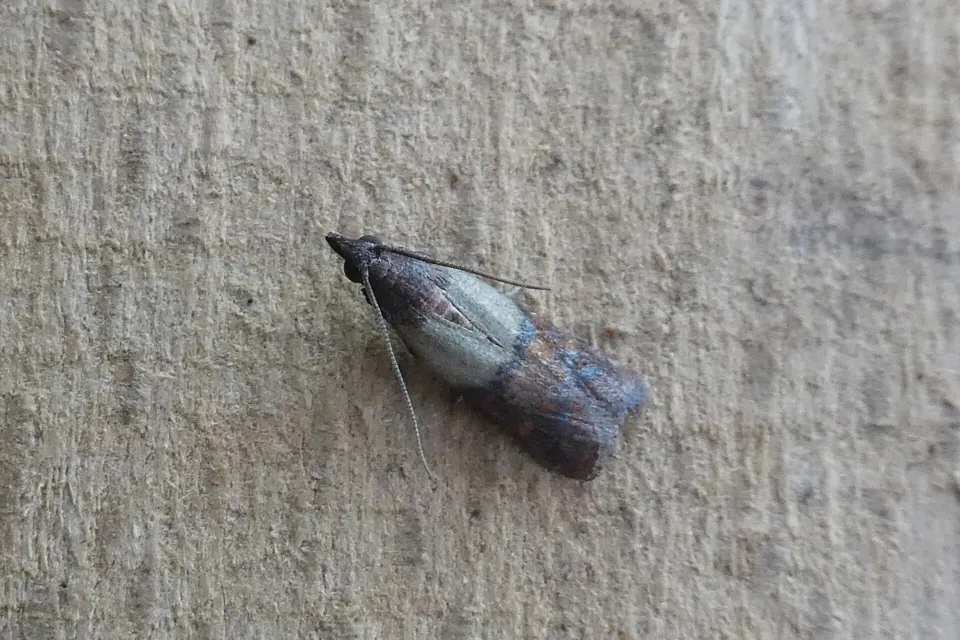
This is the moth you see fluttering in a zigzag around the kitchen at night. It is small, around half an inch with wings folded. The inner part of the wing is pale gray-tan and the outer part is coppery. The larvae do the damage. They are cream-colored caterpillars that leave silk webbing in cereal, flour, nuts, dried fruit, birdseed and dry pet food. When they are ready to pupate, they often wander away from the food and climb walls toward the ceiling.
Sawtoothed grain beetle
A slim, dark brown beetle about a tenth of an inch long. Under magnification you can see six tooth-like points along each side of its thorax. It feeds on cereals, oatmeal, pasta, dried fruit and similar foods. It is small enough to work through folded flaps and loose seals.
Flour beetles
Red and confused flour beetles are reddish-brown and a little larger than sawtoothed grain beetles. They do best in flour, baking mixes and broken grain. A heavy infestation can leave flour grayish with a sharp, unpleasant odor.
Cigarette and drugstore beetles
These are round, humped, light brown beetles that tuck their heads down when seen from the side. They feed on a wide range of dry goods, including spices such as paprika and chili powder, dried herbs, pet food, crackers and dried flower arrangements. Both fly and are drawn to windows.
Carpet beetles
Adults are tiny, rounded and often mottled. They feed on pollen outdoors and come inside through open windows and doors. Their bristly larvae feed on animal-based material: wool rugs and clothing, felt, feathers, and the lint and pet hair that collect under furniture and along baseboards. For some people, contact with the larval hairs can irritate skin.
Where and when they show up in Boise homes
The valley's official weather station records hot, dry summers and very little rain in July and August. That dryness does little to slow these insects. They evolved to live in dry stored grain, and a heated kitchen is comfortable for them in any month. Warmth tends to speed their development, so problems often seem to blow up in summer. Fall baking and bulk shopping can bring a new wave of flour and mixes into the house.
The kitchen pantry is only one possibility. In Boise these places come up again and again:
- Garages and sheds. Birdseed, grass seed, dry dog food and bagged feed often sit open for months. On larger Southwest Boise lots with pasture or chickens, feed bins can quietly keep a moth population going.
- Older cabinetry. Many North End, East End and Bench homes have original or long-installed cabinets with gaps, seams and old shelf paper where flour and crumbs settle. Beetles can live in those crevices after the obvious packages are gone.
- Decor and gifts. Dried flower wreaths, seed ornaments, potpourri and holiday food gifts can carry drugstore and cigarette beetles.
- Closets and storage rooms. Carpet beetle larvae favor dark, undisturbed spots: wool kept in bins, under-bed storage and the lint line along baseboards. Adults that fed on blooming shrubs and trees in the City of Trees often show up on sunny windowsills in spring.
Signs to look for
One beetle on the counter does not prove an infestation. A pattern does.
- Small moths flying in the kitchen or resting on walls and ceilings in the evening
- Silky webbing or clumped food in cereal, flour, nuts, birdseed or pet food
- Pale caterpillars or cocoons where the ceiling meets the wall, or inside cabinet hinges
- Tiny brown beetles in opened packages, in spice jars or on windowsills
- Pinhole openings in sealed bags or boxes
- Flour that looks grayish or smells off
- Shed larval skins or small, irregular holes in wool clothing, rugs or felt
- Fuzzy, carrot-shaped larvae along baseboards, in closets or under furniture
What helps reduce pantry pests and carpet beetles
Stored-product insects depend on a food source. Finding and removing that source matters more than anything else. These prevention basics help:
- Check groceries when they come home. Look at flour, grains, nuts and pet food before shelving them, especially bulk-bin items and packages that sat on a shelf for a long time.
- Store dry goods in sealed containers. Glass, metal or heavy plastic with tight lids keeps a new arrival from spreading. It also makes problems easy to spot.
- Buy in amounts you will use. Older open packages at the back of a shelf are where many infestations start.
- Look past the pantry. Check birdseed, pet food, spices, decor and garage storage, not just cereal boxes.
- Discard infested items sealed in a bag and placed in an outside trash bin.
- Keep shelves and crevices clean. Spilled flour in cabinet seams can keep beetles going.
- For carpet beetles, regular vacuuming of lint and pet hair, clean storage of wool, and snug window screens all help.
Moths do not mean the whole kitchen is lost
Most pantry infestations trace back to one or two packages. Moths flying around the room usually come from larvae that left the food to pupate. They are not a sign that every shelf is infested. Find the source first, then decide what else needs to go.
When to call a licensed provider, and what they do
Many households clear a pantry problem by finding and removing the source. Calling a licensed provider makes sense when:
- Moths or beetles keep appearing weeks after you have cleared out every likely package
- Insects show up in several rooms, or you cannot find any food source
- Carpet beetle larvae are damaging rugs, clothing or other valuables
- You are unsure what the insect is, or whether it is a stored-product pest at all
A provider typically starts with identification, because the right species points to the right hiding places. They inspect pantries, cabinets, appliances, garage storage, closets and ductwork openings. They may place monitoring traps to show where activity is concentrated. Any treatment is targeted to cracks, voids and other spots where insects are sheltering, not to open food. A follow-up visit confirms whether the numbers are dropping. Pest control applicators in Idaho are licensed through the Idaho State Department of Agriculture. Our guide to choosing a pest control company covers what to ask.
Questions Boise households ask
I emptied my pantry, but the moths are back. Why?
The source is often somewhere else, most often birdseed, dog food or feed in the garage, or a forgotten bag in a basement or hall closet. Cocoons on ceilings and in cabinet hinges can also produce new moths for a while after the food is gone.
Doesn't Boise's dry climate keep these insects out?
No. Stored-product pests are adapted to very dry food, and indoor temperatures suit them in every season. A hot Boise summer can actually speed up how fast they multiply.
I live in an older North End house. Do the old cabinets matter?
They can. Seams, gaps behind face frames and layers of old shelf liner trap flour and crumbs, and beetles can feed there after the packages are gone. Careful cleaning of those crevices helps, and a provider can check spots that are hard to reach.
Are carpet beetles coming in from the yard or the foothills?
Adult carpet beetles feed on flower pollen outdoors and can fly in through open windows anywhere in town. The damage comes from their larvae indoors, which feed on wool, lint and pet hair, so the indoor conditions are what decide how big the problem gets.
Can pantry pests make my family sick?
They are generally considered a food-quality problem rather than a disease risk, but infested food should not be eaten. For general food-safety questions, Central District Health serves Ada County.
I rent an apartment. What should I do?
Check and store your own dry goods first. If insects keep appearing, or you suspect they are coming from shared walls or storage areas, let your property manager know so the source can be found.
See also the seasonal pest calendar and our other pest guides.