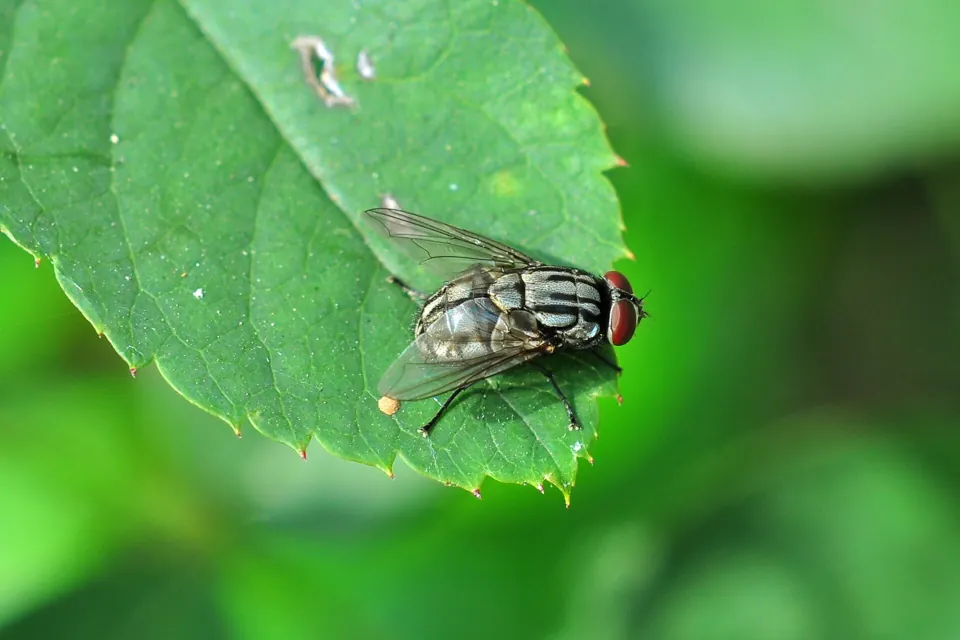
Which flies you're probably seeing
Most fly complaints in Boise homes involve four kinds. They look alike in passing, but they breed in very different places. That's why identifying the fly comes before anything else.
House flies
House flies are gray, about a quarter inch long, with four dark stripes down the back of the thorax. They lay eggs in moist, decaying material: kitchen garbage, pet waste, compost, and manure in coops or pens. They are mostly a summer problem. Because they move between waste and food, they can carry germs onto counters and dishes.
Cluster flies
Cluster flies are slightly larger and darker than house flies. They have fine golden hairs on the thorax, which can rub off, and they fold their wings flat, one over the other, when resting. Their larvae develop inside earthworms in lawns and garden soil, not indoors. The adults are what you notice. They gather on warm walls in late summer and fall, then crawl into attics and wall spaces to spend the winter.
Fruit flies and drain flies
Fruit flies are small and tan, often with red eyes. They hover over ripe produce, recycling bins and sugary spills. Drain flies, also called moth flies, are fuzzy and gray, with wings held like a little roof. They flutter weakly near sinks, tubs and floor drains. They breed in the slimy film that builds up inside drains.
- Common indoors
- House, cluster, fruit and drain flies
- House fly peak
- Summer, especially long hot stretches
- Cluster fly season
- Move in late summer and fall; seen indoors on warm winter and spring days
- Where they start
- Trash, pet waste, compost, coops, lawns, drains
- Health note
- House flies can carry germs from waste to food
When and where they turn up in Boise
Summer heat. The airport record shows Boise reaching 90°F on about 55 days a year. Warmth shortens a house fly's life cycle, so a trash cart in the sun can produce a new generation in roughly a week or so. The same is true of a forgotten bag of dog waste or a damp compost pile. July and August are also the driest months, with only about 0.2 inch of rain each. In that dry air, flies concentrate wherever moisture stays put: garbage, coop water, an irrigated compost bin or a dripping hose bib.
Yards with animals. Chickens are common in Boise backyards. In parts of Southwest Boise, some properties have acre lots, pasture and livestock. Manure and wet bedding are among the most productive breeding spots for house flies, so these homes often see more of them than a downtown apartment would.
Harvest time. Late summer gardens bring tomatoes, peaches and squash into the kitchen faster than anyone can eat them. Fruit flies tend to follow.
Fall and winter. Cluster flies come from lawns and gardens across the city. As days shorten, they sun themselves on south and west walls, much like boxelder bugs do. They then work into gaps around eaves, attic vents, siding and window frames. By the time canal water shuts off in fall, many have already settled into attics. Older North End and East End homes often have more of those small openings. Even newer homes can collect cluster flies, though. On sunny winter days, attic warmth wakes some of them, and they wander toward the light.
Year-round. Drain flies can show up any month. Basement floor drains, guest bathrooms and sinks that sit unused are common sources.
Signs worth noticing
- Flies circling the trash cart, compost bin or coop in the afternoon heat
- Small dark specks on light fixtures, windowsills or pale siding
- Slow, clumsy flies buzzing at upstairs or attic windows on sunny winter days
- Dead flies piling up on sills, inside ceiling light covers or across the attic floor
- A small cloud hovering over the fruit bowl or recycling
- Fuzzy, moth-like flies resting on bathroom walls near a drain
- A sudden burst of large, shiny green or blue flies in one room
When flies point to something else
Big metallic flies appearing all at once, often near one wall or ceiling, usually mean something has died nearby. In fall and winter that is often a mouse or rat inside a wall, attic or crawl space, and an odor may come before or with the flies. The flies fade once the source is removed, so the real job is finding it. See the guides to mice and rats. Drain flies that keep coming back after drains are clean can point to a broken pipe or standing water under a floor. A plumber may need to look at that.
What helps cut them down
Flies show up where they can breed. Removing what they breed in does more than any amount of swatting.
- Lids that close. Keep trash and compost bins tightly covered. Park carts away from doors where you can, and rinse them out when they get grimy during hot spells.
- Pet waste. Pick it up often in summer. In hot weather, a few days is enough time for a new generation.
- Coops and pens. Change wet bedding, manage manure and keep feed dry and sealed. This also makes the yard less attractive to rats.
- Screens. Repair torn window and door screens. Older wood windows in historic neighborhoods often have gaps that need attention.
- Kitchen habits. Refrigerate ripe produce during harvest season, rinse cans and bottles before recycling, and take out kitchen trash often.
- Leaks and idle drains. Fix drips. Run water now and then in sinks and floor drains that rarely get used.
- Gaps before late summer. Cluster flies breed in soil, so indoor cleaning won't reduce their numbers. Fewer get inside when gaps around eaves, vents and siding are sealed before they start looking for winter shelter.
Choosing and applying pest control products is work for a licensed applicator. For general questions about products, the National Pesticide Information Center is a neutral resource.
When to call a licensed provider
It makes sense to bring in help in these situations:
- Flies keep coming after you've dealt with trash, pet waste and drains.
- Cluster flies return to the attic every fall.
- You keep animals and fly numbers are hard to manage.
- You can't find where the flies are coming from.
- You suspect a dead animal in a wall, especially if rodents have been active.
A licensed provider typically starts by confirming which fly is involved, since cluster flies and house flies call for very different plans. They then look for the breeding source or entry points. For cluster flies, that usually means checking the sunny sides of the house, the eaves and the attic vents. Treatment is often timed for late summer, before the flies move in, and the provider may suggest sealing work. For house flies, the focus is on sanitation, often backed by bait placed outdoors near waste areas. For drain flies, the provider may point you to a plumber if the source is a pipe problem.
In Idaho, people who apply pesticides commercially are licensed through the Idaho State Department of Agriculture. Our guide to choosing a pest control company in Idaho covers what to ask. When you request a free quote, describe the flies, where they gather and the time of year you see them.
Questions from Boise households
Why are slow flies buzzing at my windows in January?
These are almost always cluster flies that moved into the attic or walls last fall. A sunny day warms their hiding spots, and they crawl toward the light. They don't breed indoors, so this doesn't mean flies are multiplying inside your home.
We keep chickens. Is that why summer flies are so bad?
It can be. Wet bedding and manure are prime house fly breeding material, and Boise's summer heat speeds up their development. Keeping the coop dry and cleaned on a regular schedule usually makes a noticeable difference.
Do homes near the Greenbelt or a canal get more flies?
Not necessarily. House flies track food waste and manure more than open water. Drain flies come from moisture inside the house. Your own yard, trash and drains usually matter more than what's down the street.
Big shiny flies showed up in one bedroom. What happened?
Are the tiny flies in my kitchen always fruit flies?
Not always. Fuzzy flies near a sink are drain flies. Small dark flies around houseplants are often fungus gnats from damp potting soil. Beetles and moths in stored food are a different problem, covered in the pantry pests guide.
For a month-by-month look at what tends to show up when, see the seasonal pest calendar.